
When silence counts as no answer
Article 12(3) of the GDPR gives a company one month from receiving your request to tell you what it has done. Within that same month it may instead do one of three things, and each counts as an answer:
- It can extend by up to two more months if the request is complex or it has many requests, but only if it tells you within the first month and gives the reasons.
- It can refuse. Under Article 12(4) it must tell you, within one month, why it will not act and that you can complain to an authority or go to court.
- It can ask who you are. If it has reasonable doubts about your identity, it can ask for the information it needs to confirm it (Article 12(6)). The clock pauses until you reply.
A company has failed to answer when the month has passed and you have none of these: no data, no extension with reasons, no refusal with reasons, no identity check. An automatic “we received your message” email is not an answer. Nor is an extension notice that arrives after the month, or one that gives no reason.
| What you got | Has the company answered? | What to do |
|---|---|---|
| Nothing after one month | No | Send the reminder below |
| Only an automatic acknowledgement | No | Send the reminder below |
| An extension, with reasons, within the month | Yes, for now | Wait until the new date, at most three months from your request |
| A refusal with reasons | Yes | Complain to the authority if you disagree |
| A request to confirm who you are | Yes, for now | Reply with what it needs to find your account |
Send one reminder
Before you go to an authority, give the company one more chance in writing. Authorities expect it: the ICO tells people to “send them a follow up email or letter” when a month has passed, and the CNIL asks you to show you tried the company first.
- Reply to your original email.
Keep the first request in the same thread, so its date is visible to the company and later to the authority.
- Send it to the privacy contact and the data protection officer.
If the privacy policy names a DPO, copy them in. See the next section.
- Give a short, firm deadline.
The letter below gives 14 days as a courtesy. The legal deadline has already passed.
- Save everything.
Keep your request, the reminder, any automatic replies and the dates as evidence.
The reminder letter
Fill in the fields and copy it. Tick the box if your first request asked for a copy of your data rather than deletion.
Dear [Company] privacy team,
On [date of your request] I asked you to erase the personal data you hold about me, from the email address [your account email]. I have not had an answer.
Article 12(3) of the GDPR gives you one month to answer, or to tell me within that month why you need longer. That month has passed.
Please answer within 14 days. If you do not, I will complain to my data protection authority under Article 77 of the GDPR.
Kind regards,
[Your name]
Rather not keep track of the dates?
Reflex sends your requests from your own address, watches each deadline and sends the reminders for you. When a company stays silent, it prepares the complaint for you to file. Free to join the beta, €19 once when you start.
Write to the data protection officer
Many companies must appoint a data protection officer (DPO), and must publish the DPO’s contact details (Article 37(7)). Article 38(4) says you may contact the DPO about anything to do with your data and your rights. The DPO’s job is to make the company follow the GDPR, so a request that went missing in customer service often moves once the DPO sees it.
Look in the company’s privacy policy for “data protection officer”, “DPO” or “Datenschutzbeauftragter”. If there is one, send the reminder to that address as well. If there is none, the privacy contact is enough.
Complain to the authority
If the reminder’s 14 days pass with no answer, you can complain. Article 77 gives you the right to lodge a complaint with a data protection authority, in particular in the country where you live, where you work, or where the breach happened. You do not need a lawyer and it costs nothing. The authority must tell you how the complaint is progressing and what the outcome is (Article 77(2)).
What to put in your complaint
Every authority asks for roughly the same things. Gather them before you start the form.
- Who you are.
Your name and contact details. Authorities do not take anonymous complaints about your own data.
- Which company.
Its name as it appears in the privacy policy, its address, and the email you wrote to.
- What you asked for, and when.
For example: “On 3 October 2026 I asked for my data to be erased under Article 17.”
- What happened since.
A short timeline: the request, the reminder, any replies, and that no answer came within the month required by Article 12(3).
- Copies of the emails.
Your request, your reminder and anything the company sent back. Send only the key documents.
- What you want.
That the authority makes the company answer your request.
Authorities and their complaint pages
| Country | Authority | How to complain |
|---|---|---|
| United Kingdom | ICO | Online, after a short check |
| France | CNIL | Online, with a CNIL account |
| Italy | Garante | Signed complaint by PEC or registered post |
| Germany | One authority per Land | Find your Land on the BfDI list |
| Spain | AEPD | Online through the electronic office, or by post |
United Kingdom: the ICO
The ICO asks you to raise the problem with the organisation first, then complain within three months of your last meaningful contact with it. Since 19 June 2026, section 164A of the Data Protection Act 2018 makes UK organisations run their own data protection complaints process and acknowledge a complaint within 30 days. If the company has a complaints route, use it alongside your reminder. The ICO says you can still complain to it at any time.
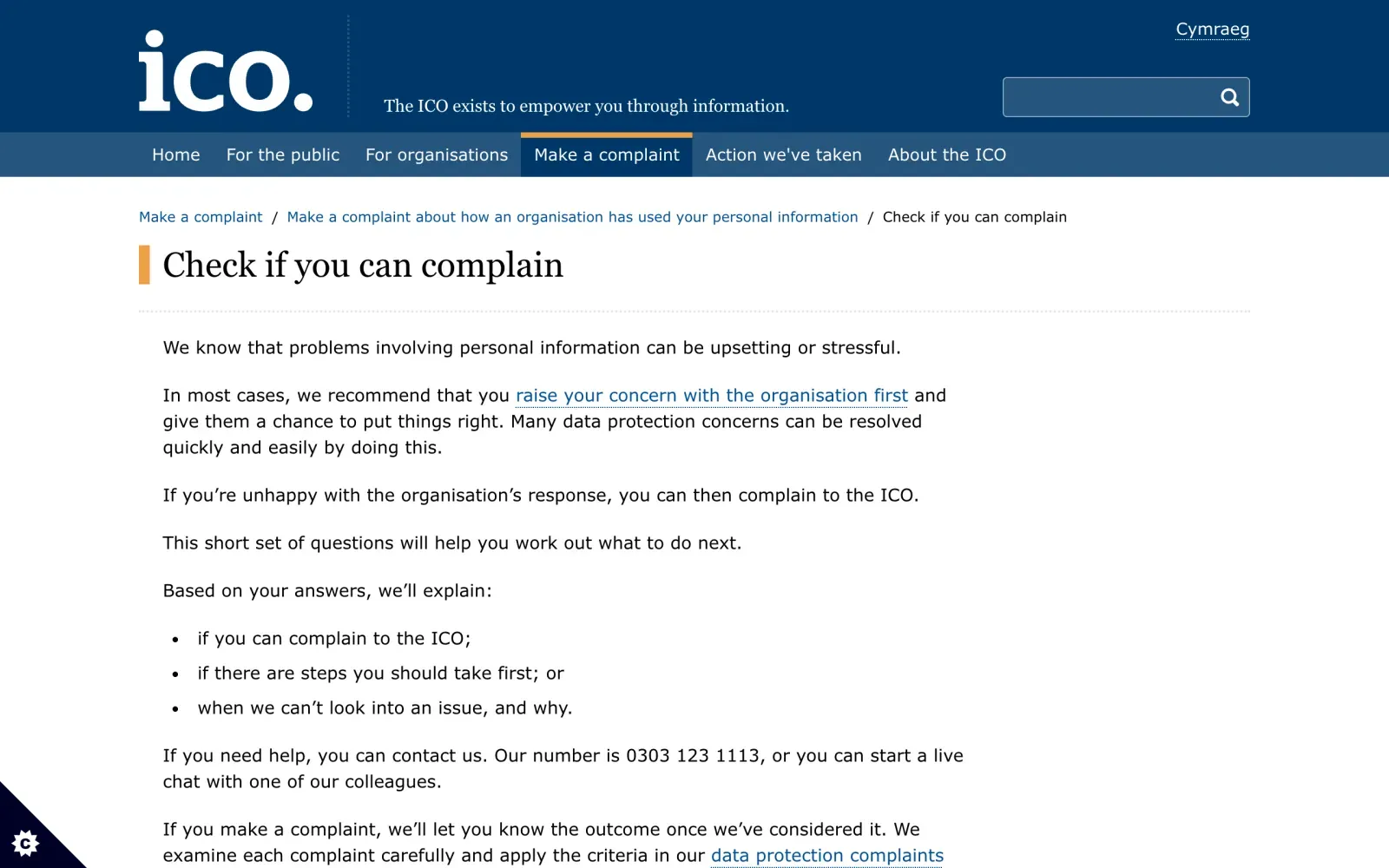
Open the ICO’s complaint page and press Start now. A few questions check that the ICO can look into it, then lead you to the form, where you upload your emails.
The ICO cannot act as your representative or award compensation. For compensation, the ICO points to the courts.
France: the CNIL
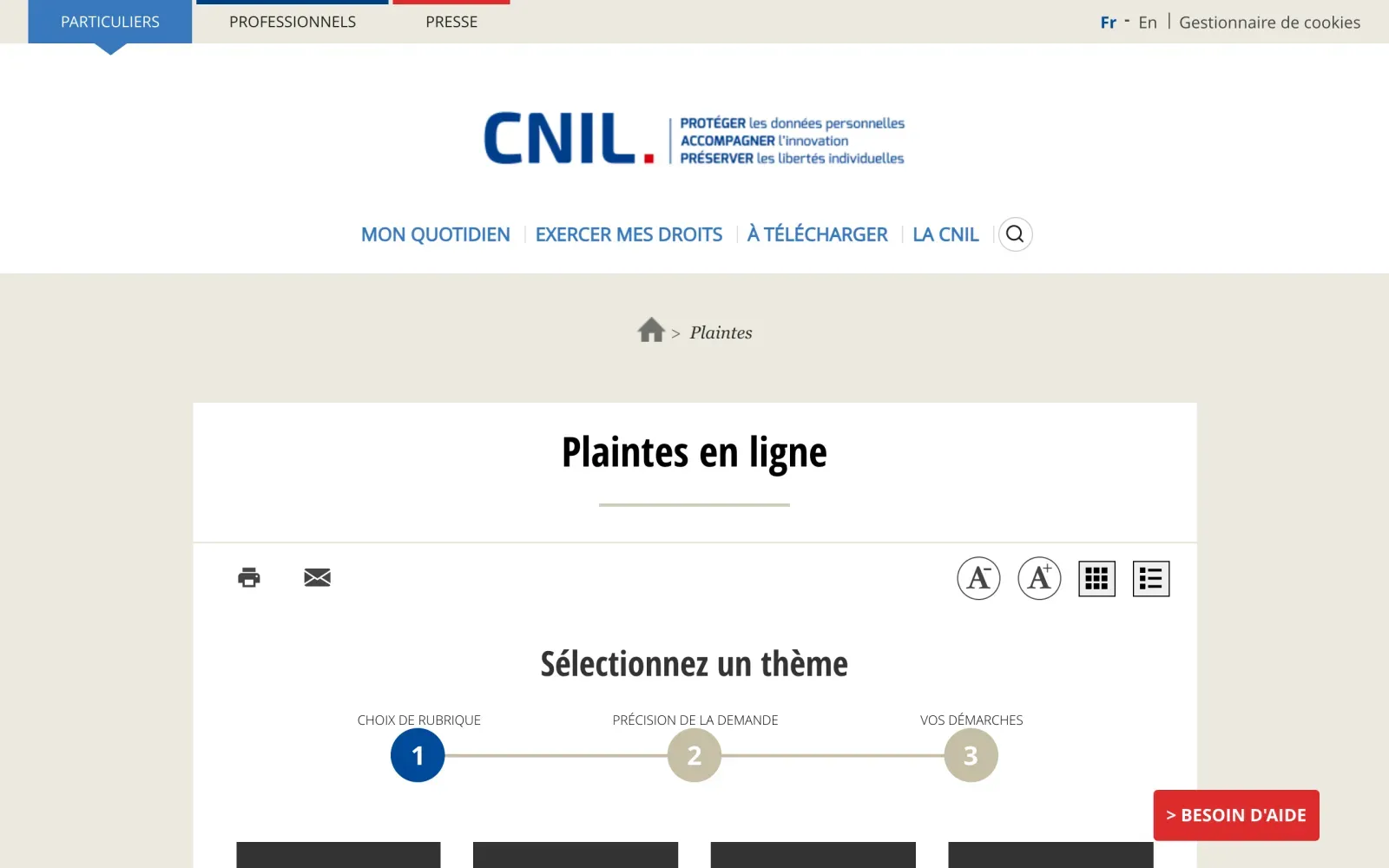
The CNIL takes complaints only after you have exercised your rights with the company or its DPO and waited at least one month. File online at the CNIL’s Plaintes en ligne page. You create a CNIL account, which lets you follow the complaint and talk to the officer handling it. The complaint is written in French. Add the company’s name and address and copies of the documents needed to understand your complaint.
If you prefer post, the CNIL’s address is Commission nationale de l’informatique et des libertés, Service des plaintes, 3 Place de Fontenoy, 75007 Paris.
Italy: the Garante
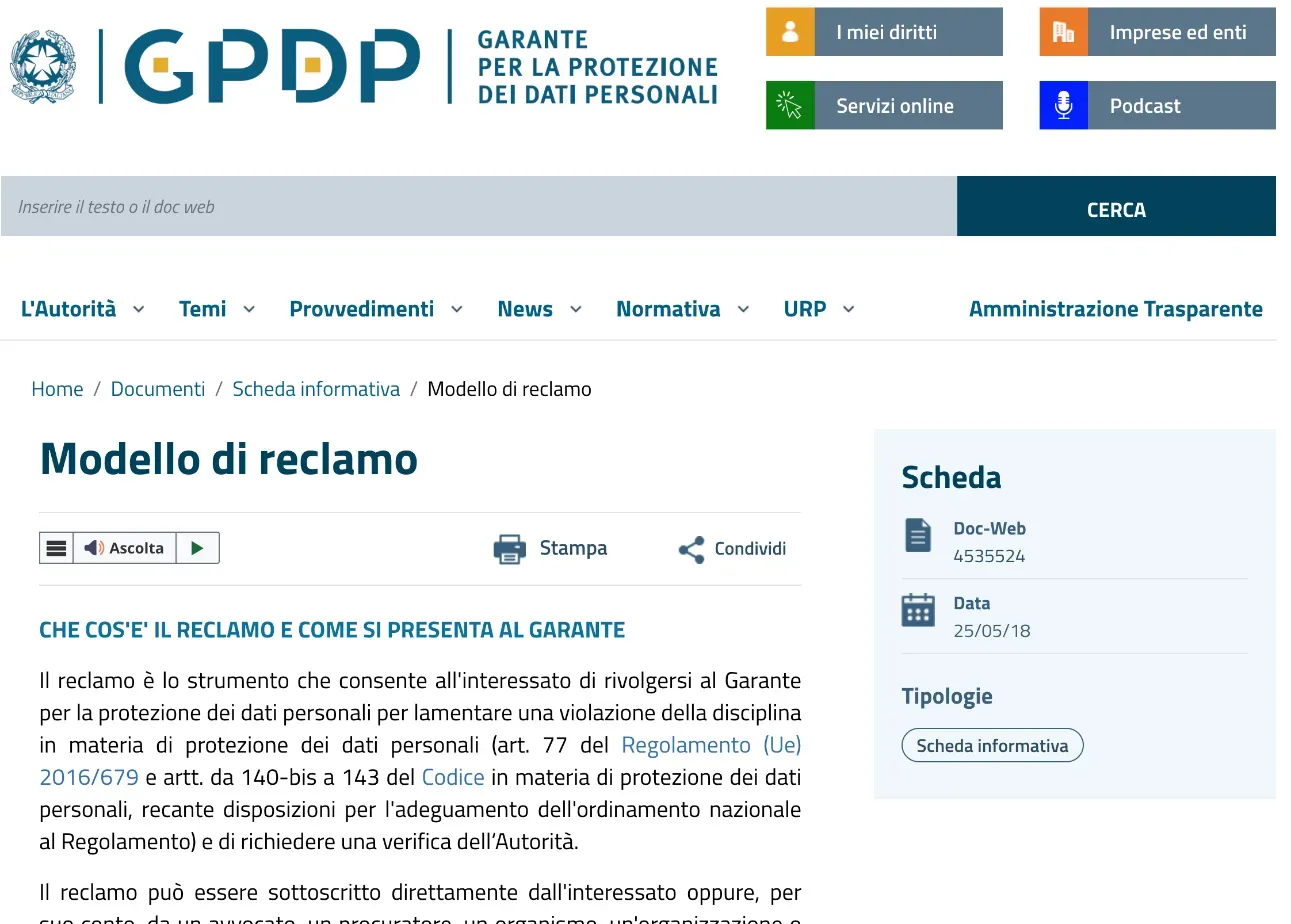
A complaint to the Garante is called a reclamo. Its model and instructions page offers a template you can fill in, or you can write your own with the same content. The instructions list three ways to send it:
- by PEC (certified email) to protocollo@pec.gpdp.it,
- by registered post to Garante per la protezione dei dati personali, Piazza Venezia 11, 00187 Roma,
- by hand at the same address.
The complaint must be signed: with a digital signature, an authenticated signature, or a handwritten signature with a copy of a valid identity document. A plain email is not one of the channels the instructions list. Mention the requests you already made to the company and attach them.
Germany: one authority per Land
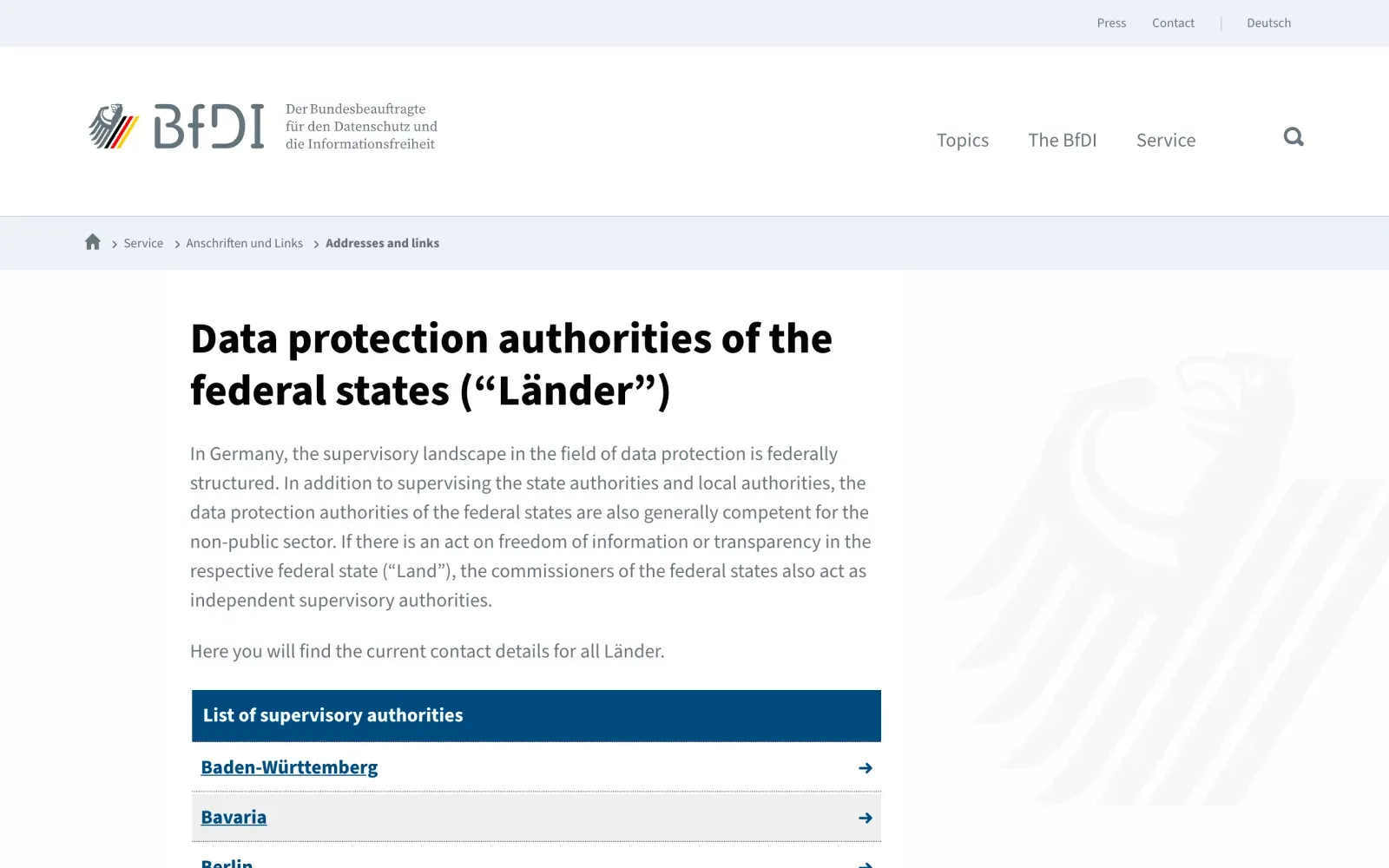
Germany has no single authority for companies. Each Land (federal state) has its own data protection authority, and those authorities supervise the private companies in their Land. The federal commissioner, the BfDI, covers only special sectors such as telecoms and postal services. The BfDI publishes the list of Land authorities, each with its own contact details and complaint channel.
The authority responsible for a company is usually the one for the Land where the company is based. Article 77 also lets you complain where you live. The BfDI says a complaint is not bound to any particular form: post, email or a Land’s online form all work.
Spain: the AEPD
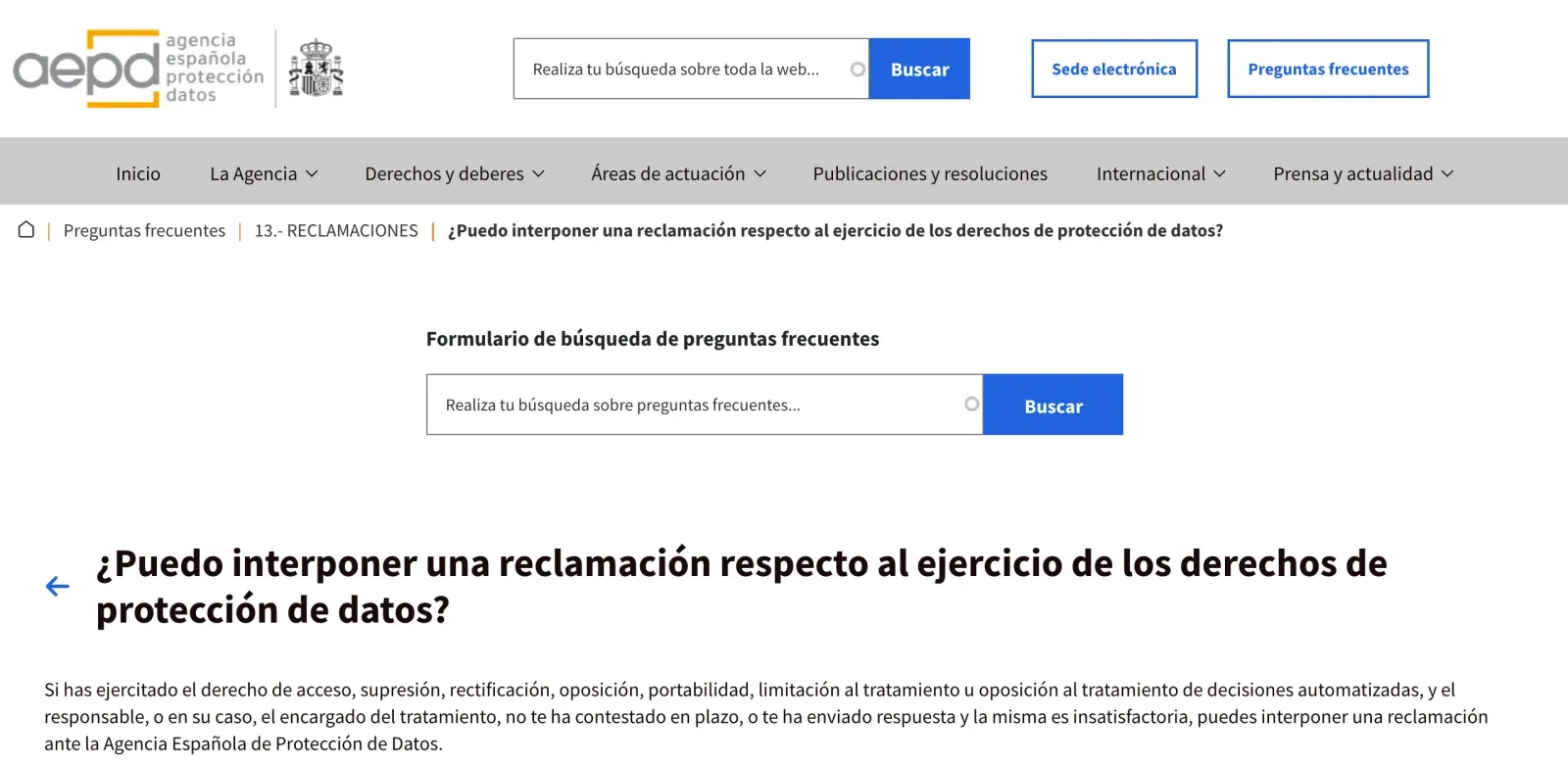
Before complaining about a right that was not respected, you must have written to the company in a way you can prove, and waited out the deadline, one month as a general rule. Then complain to the AEPD through its electronic office (sede electrónica), choosing the claim for rights not answered, or by post to the Subdirección de Inspección, Agencia Española de Protección de Datos, Edificio Cuzco IV, Paseo de la Castellana 141, planta 9, 28046 Madrid. Attach a copy of your request and any reply.
After you complain
Each authority decides how to handle a complaint, and timescales differ. The authority must keep you informed (Article 77(2)), and if it neither handles the complaint nor tells you how it is going within three months, Article 78(2) lets you go to court against it.
You can also take the company to court yourself under Article 79, and claim compensation for damage under Article 82. Authorities cannot award compensation, so this is the route if you want it. Take legal advice first.
If your first request was for deletion, the deletion letter guide covers what the company may keep. If it was for a copy, see the subject access request guide.
Questions
How long should I wait before complaining?
One month from the day the company received your request, or up to three months if it told you within the first month that it needs longer and why (Article 12(3)). The CNIL and the AEPD both ask you to wait out that month first.
Does a complaint cost anything?
No. Article 57(3) of the GDPR says an authority's work is free of charge for the person whose data it is. The UK GDPR keeps the same rule.
Can the authority get me compensation?
No. An authority can order the company to answer and can fine it, but compensation is a matter for the courts (Article 79 and Article 82). The ICO says plainly that it cannot award compensation.
Which country's authority do I complain to?
Article 77 lets you complain in the country where you live, where you work, or where the breach happened. Most people use the authority where they live, in their own language.
What if the authority does nothing?
If it does not handle your complaint or tell you how it is progressing within three months, Article 78(2) lets you take the authority to court. It rarely comes to that.
Sources
- Regulation (EU) 2016/679, the GDPR, Articles 12, 37, 38, 57, 77, 78, 79 and 82EUR-Lex, checked 15 November 2026
- What to do if you don't get a response or you're unhappy with itICO, checked 15 November 2026
- How to make a data protection complaint to an organisationICO, checked 15 November 2026
- New data protection complaints law now in forceICO, checked 15 November 2026
- Check if you can complainICO, checked 15 November 2026
- Adresser une plainteCNIL, checked 15 November 2026
- Plaintes en ligneCNIL, checked 15 November 2026
- Reclamo, modello e istruzioniGarante per la protezione dei dati personali, checked 15 November 2026
- Complaints to data protection authoritiesBfDI, checked 15 November 2026
- Data protection authorities of the federal statesBfDI, checked 15 November 2026
- ¿Puedo interponer una reclamación respecto al ejercicio de los derechos de protección de datos?AEPD, checked 15 November 2026
- ¿En qué podemos ayudarte?AEPD, checked 15 November 2026